Duplicated Effort
Teams solve the same problem in different ways, repeat research, and rebuild prompts that should become shared organizational knowledge.

ArtForm implements one priority operational workflow using approved technology, human review, defined operating controls, stakeholder activation, and an agreed measurement baseline. The engagement is designed for government contractors, federal agencies, associations, and growing organizations ready to move beyond isolated AI experiments.
Built for organizations ready to move from AI experimentation to accountable implementation.
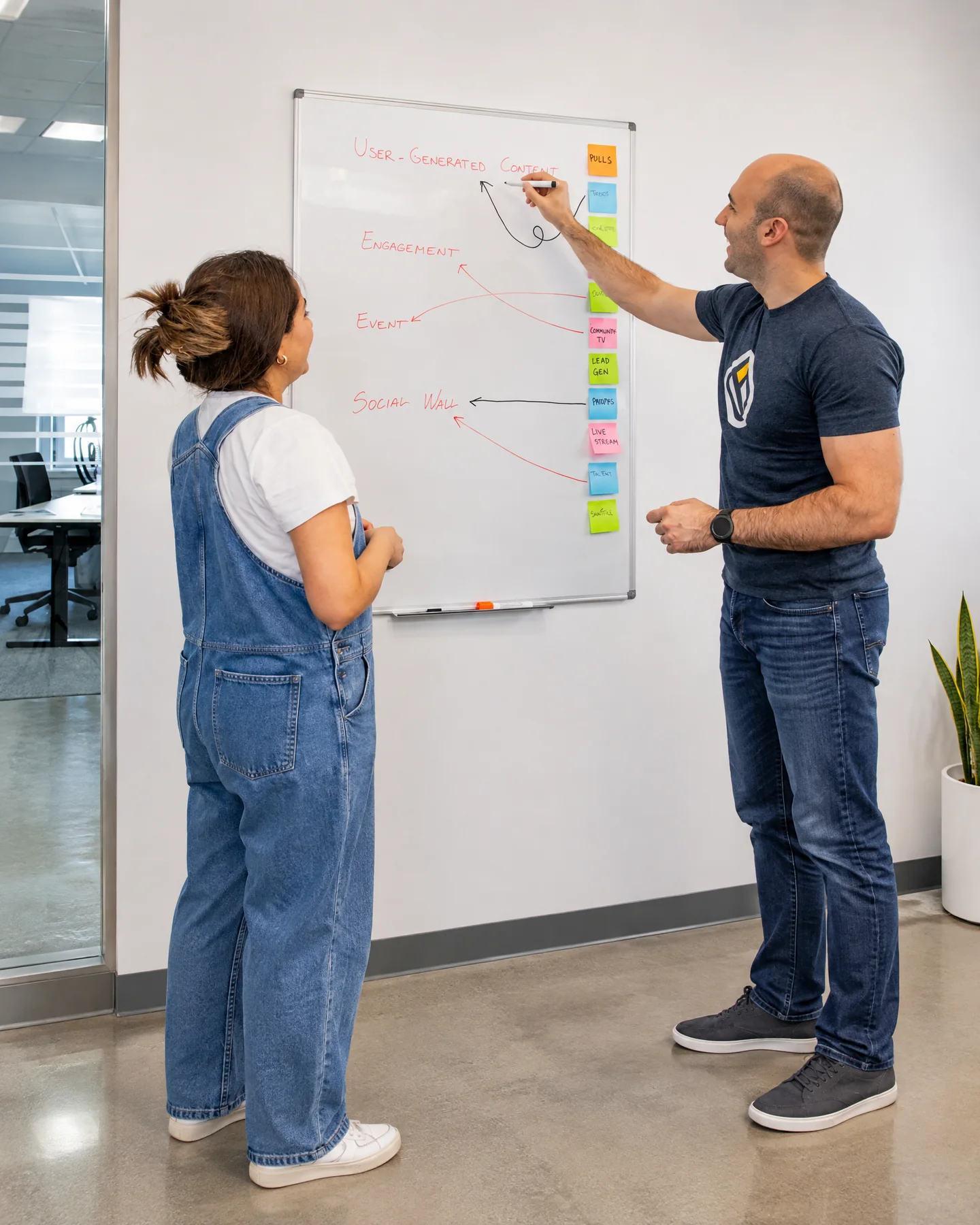
Individual tools and isolated prompts can save time, but they do not create a consistent way for work to move across teams, systems, and review points.
Teams solve the same problem in different ways, repeat research, and rebuild prompts that should become shared organizational knowledge.
Information gets lost between departments, while outputs vary according to who created them and which tool they used.
Leadership cannot consistently see which tools, data, approvals, or operating rules are shaping AI-assisted work.
The problem is not a lack of AI tools. It is the absence of a shared, well-designed way to use them.
ArtForm identifies a high-value process, maps how work moves today, and determines where AI can improve speed, consistency, visibility, or decision-making. We configure the workflow around your people, approved technology, business rules, and review requirements.
Every engagement begins with a defined operating problem, an accountable owner, and measurable success criteria.
AI supports research, analysis, production, and coordination while people retain appropriate review and decision authority.
Workflow design, governance, training, and measurement are delivered together so the process can become part of normal operations.
The first workflow should be important enough to measure and focused enough to implement.
Turn campaign response, website activity, and sales conversations into organized follow-up, CRM updates, and pipeline intelligence.
Move signed work into delivery with consistent intake, document collection, task assignment, and internal briefings.
Research opportunities, organize account intelligence, prepare meeting briefs, and capture next actions in a shared system.
Transform subject-matter expertise into drafts, reviews, approvals, publishing tasks, and reusable organizational knowledge.
Convert meetings into decisions, assignments, deadlines, and structured follow-up instead of scattered notes.
Create a controlled path for teams to find policies, procedures, project information, and approved organizational knowledge.
Organize opportunity research, requirements, differentiators, past-performance evidence, review tasks, and reusable proposal knowledge.
The standard target is six to eight weeks when workflow complexity, system access, governance review, and stakeholder availability support that range. ArtForm takes one fragmented process from current-state analysis through a tested AI-enhanced workflow, user activation, and a practical measurement plan.
Select a workflow with a meaningful business problem, an accountable owner, and measurable value.
Document how information, decisions, and work move between people and systems today.
Define appropriate AI tasks, human review points, data requirements, and safeguards.
Configure the workflow, test it with users, and train the people responsible for operating it.
Compare performance with the baseline, improve the workflow, and identify the next opportunity.
Every sprint begins with a baseline and defines success measures for the selected workflow.
The strongest fit is an organization that has moved beyond basic AI curiosity but has not yet created a consistent operating model.
Primary buyers often include a CEO, chief operating officer, chief of staff, operations leader, marketing leader, innovation leader, or department head. Information technology participates where systems, data, permissions, or security controls are involved.
You do not need to transform the entire organization at once. Begin with one process where delays, repetitive work, or disconnected teams are already costing time and capacity.
ArtForm defines the scope, timeline, responsibilities, and investment after a focused workflow discovery conversation.
Identify Your First WorkflowNot necessarily. ArtForm begins with the tools your organization has already approved and recommends additions only when the workflow requires capabilities your current stack cannot provide.
Yes. ArtForm designs workflows around approved business platforms, including Microsoft 365 and Copilot, approved OpenAI environments, Google Workspace and Gemini, HubSpot, and comparable systems. Final scope depends on available licenses, permissions, APIs, and security requirements.
The sprint focuses on configuration and implementation within approved platforms. Custom applications, advanced integrations, or engineering outside that scope are estimated separately or coordinated with your technology provider.
The workflow design maps data access, approved tools, permissions, human review points, and operating rules before implementation. ArtForm works with organizational leadership and technology resources to align the workflow with applicable policies and risk requirements.
Information technology or a managed-services provider should participate when the workflow touches identity, data access, integrations, security controls, or system administration. The business owner remains accountable for the operating outcome.
A small core team typically participates in discovery, workflow review, testing, and training. The exact time commitment depends on process complexity and is defined before the sprint begins.
ArtForm can refine the first workflow, support adoption, and prioritize additional workflows. The initial sprint also produces recommendations for the next implementation opportunity.
Each sprint establishes a baseline and defines success measures for the selected process. Measures may include turnaround time, manual handoffs, rework, consistency, workforce capacity, visibility, adoption, or governance compliance.
ArtForm defines each sprint around one priority workflow, the systems involved, security requirements, and participating teams. Following discovery, you receive a clear scope, timeline, responsibilities, and investment.
Tell us where delays, repetitive work, or disconnected teams are creating friction. ArtForm will review your priorities and use them to focus a workflow discovery call.
Use the questionnaire to describe the process you want to improve and how your organization defines success.